Physical Address
304 North Cardinal St.
Dorchester Center, MA 02124

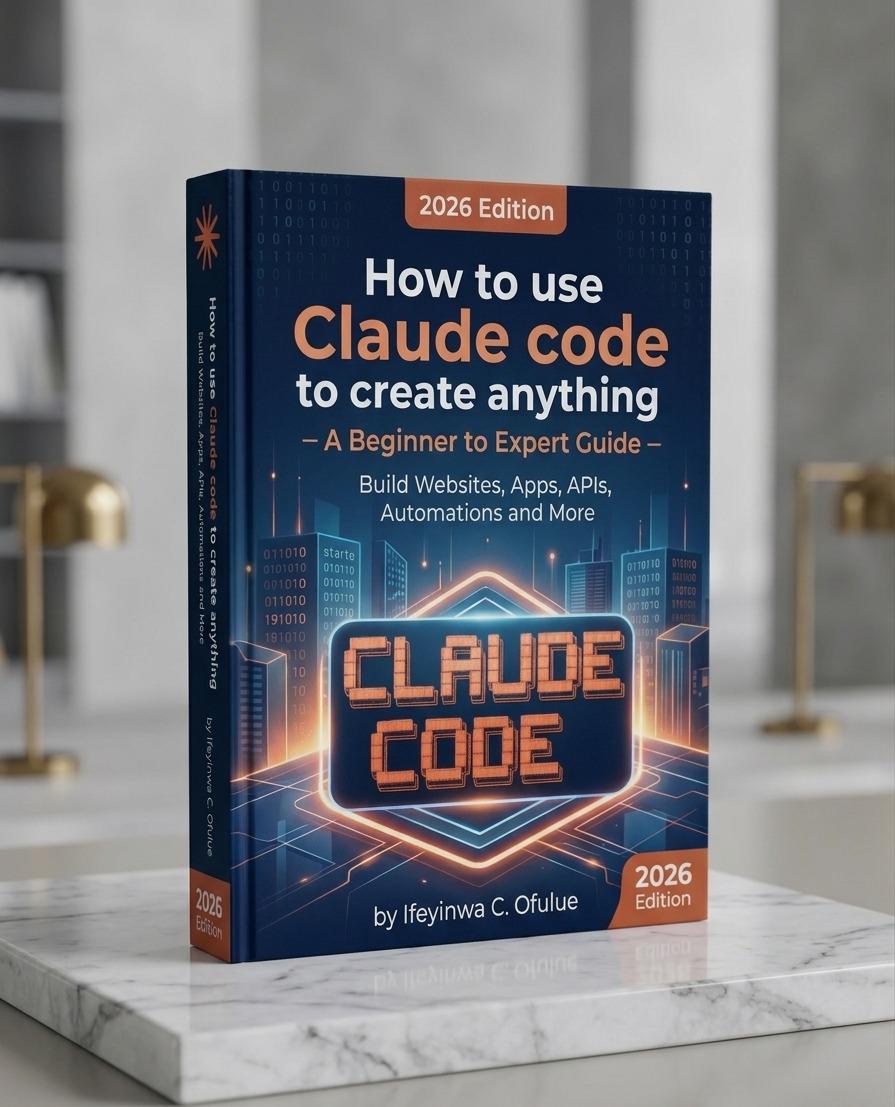
There is a new kind of developer in the world. They do not spend days fighting documentation. They do not get stuck on syntax errors for hours. They do not wait for a development team to build what they have already imagined. They describe what they want, and they build it – with Claude Code.
Claude Code is Anthropic’s AI coding agent. It lives in your terminal. It reads your files, understands your project, writes and edits code, runs commands, fixes errors, connects to external services, and executes entire engineering workflows from start to finish – all in response to plain English instructions. It is not an autocomplete tool. It is not a chatbot. It is an autonomous agent that builds.
This book is the complete guide to mastering it, from the very first command to building and deploying a production-ready SaaS application. It is written for people who have an idea, a project, or a goal, and want to know exactly how to use Claude Code to bring it to life. Whether you have never written a line of code or you are an experienced developer who wants to work five to ten times faster, this book takes you where you need to go.
WHAT IS INSIDE
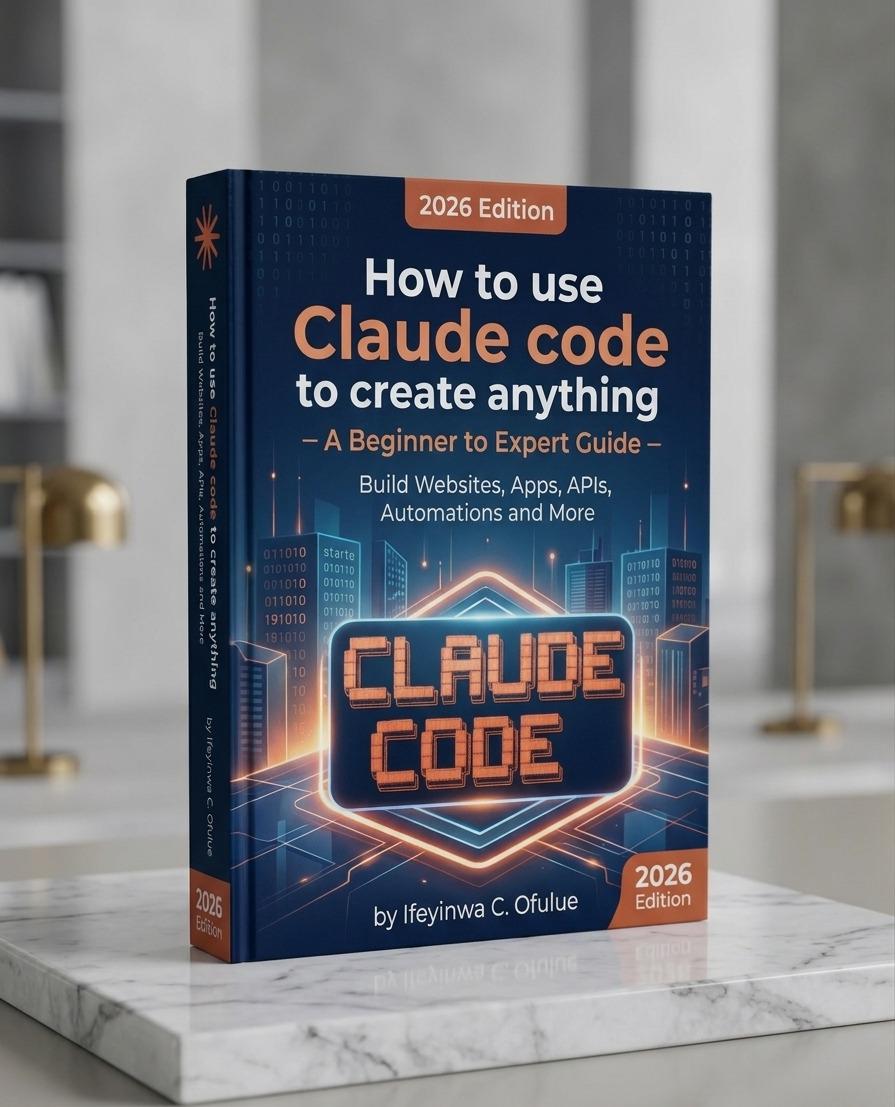
The book is structured as a progressive journey across six parts and twenty chapters, each one building on the last. Every chapter includes real, working prompt examples, explanations of why each approach works, and practical exercises to build genuine skill rather than passive familiarity.
Part One: Getting Started
The first part answers the questions every new user has before their first session. Chapter 1 explains what Claude Code actually is and how it thinks – covering the three layers of its architecture (the Core Layer where conversations happen, the Delegation Layer where subagents handle complex subtasks, and the Extension Layer where MCP servers connect Claude Code to the outside world), how it differs from other AI coding tools like GitHub Copilot, Cursor, and ChatGPT, and why understanding these foundations makes you dramatically more effective from day one. Chapter 2 walks through installation step by step on macOS, Linux, and Windows – covering Node.js setup, the npm installation, first authentication, all in-session commands, and the optional VS Code extension setup. Chapter 3 guides you through building and deploying your first complete project: a fully responsive personal website, published live to the internet, created entirely through natural language prompts.
Part Two: Core Skills
This is the highest-leverage section of the book. Chapter 4 teaches the art and science of prompting for Claude Code – not generic AI prompting advice, but prompting specifically structured for an agentic coding environment. You will learn the seven elements of a great Claude Code prompt, the CRISP framework (Context, Request, Input, Standards, Pass criteria) for complex tasks, how to iterate effectively across multiple rounds, and the specific anti-patterns that waste time and produce poor results. Three advanced techniques are covered in depth: the Rubber Duck Prompt for debugging, the Architect Prompt for planning before building, and the Reviewer Prompt for code audits without making changes. Chapter 5 covers CLAUDE.md – the file that transforms every new session from a blank slate into one where Claude Code already understands your project, your standards, your stack, and your rules. A fully annotated template covers every section: project overview, tech stack, repository structure, common commands, coding standards, database conventions, security rules, current active work, and protected areas. Chapter 6 covers file management and Git – how Claude Code reads, creates, edits, and restructures files, and how to use it for the entire version control workflow from creating branches to writing commit messages to generating pull request descriptions. Chapter 7 teaches debugging, testing, and error fixing – sharing errors, writing unit and integration tests, practising test-driven development, reviewing code for security vulnerabilities, and optimising performance.
Part Three: Building Real Things
This is where the book shifts from skills to construction. Chapter 8 covers building websites and frontend applications – from static sites built with a single description to full React TypeScript applications with authentication UI, data tables, real-time WebSocket updates, and complex filtering and sorting. Chapter 9 covers building REST APIs and backend services – project setup, CRUD endpoints, JWT authentication with refresh tokens, file uploads with validation and processing, and Swagger documentation. Chapter 10 covers databases – setting up Prisma with PostgreSQL, writing complex queries, optimising for performance, managing migrations safely, and seeding data realistically. Chapter 11 covers full-stack applications – architectural planning, feature-by-feature construction, and wiring frontend and backend together into a complete product. Chapter 12 covers automation and scripting – batch file and data processing, API integrations, web scraping with Playwright, and scheduled cron jobs with proper error handling.
Part Four: Power Features
Chapter 13 is the most technically transformative in the book. It covers MCP (Model Context Protocol) servers in full depth – what they are, why they matter, how to install and configure them, how to manage scopes (local, project, and user), and detailed setup guides for the most valuable integrations: GitHub for repository management and pull request creation, PostgreSQL and Supabase for direct database access, Sentry for production error monitoring and root cause analysis, Figma for design-to-code workflows, Perplexity for web research without leaving the terminal, and Context7 for accessing up-to-date library documentation that replaces outdated training data. The chapter explains the .mcp.json file for sharing server configurations with a team. Chapter 14 covers multi-agent workflows and subagents – what subagents are, when and how to use them, the model hierarchy (Haiku for fast repetitive work, Sonnet for standard tasks, Opus for architectural decisions), and context management strategies including /compact and /clear. Chapter 15 covers custom slash commands, hooks, and workflows – how to create team-shared commands that package repeatable processes, and how to use the hooks system to run shell commands automatically before or after Claude Code actions.
Part Five: Expert Techniques
Chapter 16 covers working on large codebases – exploring unfamiliar code, tracing complete feature flows, planning and executing safe refactors across dozens of files, dealing with legacy code by adding protective tests before touching it, and auditing dependencies for vulnerabilities. Chapter 17 covers Claude Code for teams – shared CLAUDE.md configuration committed to Git, team-scoped MCP servers, pre-review workflows, implementing code review feedback, and onboarding new developers through guided first sessions. Chapter 18 covers CI/CD and production deployments – integrating Claude Code into GitHub Actions workflows for automated code review on every pull request, deploying backends to Railway and frontends to Vercel, and managing environment configuration across development, staging, and production. Chapter 19 covers building AI-powered applications – creating streaming chat interfaces with the Anthropic SDK, processing documents and images with Claude’s vision capability, adding semantic vector search with pgvector, and building agentic features that run autonomous analysis and generate insights.
Part Six: Capstone Project
Chapter 20 is a complete, guided build of a production-ready SaaS MVP from scratch. The product is a link-in-bio platform, built across six phases: monorepo project setup with TypeScript throughout, complete database schema design with Prisma, a full REST API with authentication and analytics endpoints, a React frontend with dashboard, editor, and public page views, an AI feature using the Anthropic API to auto-generate link descriptions from URLs, and full deployment to Railway (backend) and Vercel (frontend). Every step is provided as a ready-to-use prompt that you run in Claude Code.
Appendices
The book closes with four appendices: a complete command quick reference covering all Claude Code CLI commands and in-session commands; a prompt templates library with five ready-to-use templates for project kickoff, feature development, bug fixing, code review, and refactoring; an MCP server directory with exact installation commands for the most valuable servers across code, databases, monitoring, communication, AI search, and design categories; and a troubleshooting guide addressing ten of the most common issues with specific solutions.
HOW YOU WILL LEARN
Every chapter in this book is structured the same way, deliberately. It opens by explaining what the skill is and why it matters — not as filler, but as the mental model that makes everything else stick. It then teaches the skill through real, working examples that you can copy, run, and modify immediately. It closes with exercises and project prompts that build confidence through actual output rather than passive reading.
The prompts in this book are not illustrative examples. They are production-tested templates that produce real results in Claude Code today. Each one is specific enough to run verbatim and open-ended enough to be adapted for your own projects.
The capstone project in Chapter 20 is not a tutorial where you follow steps someone else planned. It is a guided prompt sequence through which you direct the construction of a real, deployable application. By the end of it, you will have a working SaaS product live on the internet — and you will understand every part of it, because you described it into existence one prompt at a time.
WHO THIS BOOK IS FOR

This book is for six distinct groups of people, and it serves all of them from the same progressive structure.
Complete beginners who have never written a line of code and want to build real things without spending months learning syntax first. Non-technical founders and entrepreneurs who have product ideas and need to prototype, test, and iterate without a development team. Existing developers who already write code and want to multiply their output, reduce time spent on boilerplate, and handle larger and more complex projects than a single developer typically can. Freelancers who want to take on more projects, deliver faster, expand their service offerings, and increase what they can charge. Students who are learning to code and want a powerful assistant that builds alongside them and explains as it works. Business owners who want to automate internal processes, build internal tools, and stop being dependent on third parties for every small technical task.
The beginner chapters require no prior knowledge. The intermediate and advanced chapters assume you have worked through the earlier material or have equivalent experience. The book is clearly marked with skill level indicators throughout, so you can navigate to the right entry point.
WHAT MAKES THIS BOOK DIFFERENT
Most coverage of Claude Code consists of short tutorials, YouTube demonstrations, or documentation that assumes you are already a developer. This book is different in three ways.
First, it covers the full journey from installation to production deployment – not just the interesting middle part. Setting up correctly, configuring CLAUDE.md, connecting MCP servers, managing context over long sessions, and deploying to real hosting environments are as important as knowing how to write prompts, and they receive the same treatment here.
Second, it teaches prompting as a discipline specific to agentic coding, not as general AI interaction advice. The techniques in Chapter 4 – the CRISP framework, iterative prompting, constraint-based instructions, and pass criteria – are drawn from real patterns that produce reliable results in complex, multi-file projects. Generic prompting advice does not transfer directly to Claude Code. This book teaches what actually works.
Third, it is honest about what Claude Code is and is not. It does not promise that you will never need to understand code. It teaches you to work with Claude Code in a way that builds genuine understanding alongside genuine output – so that as your projects grow in complexity, your ability to direct them grows too.
AT A GLANCE
The only thing standing between you and creation is the next prompt you write. This book teaches you exactly how to write it.