Physical Address
304 North Cardinal St.
Dorchester Center, MA 02124


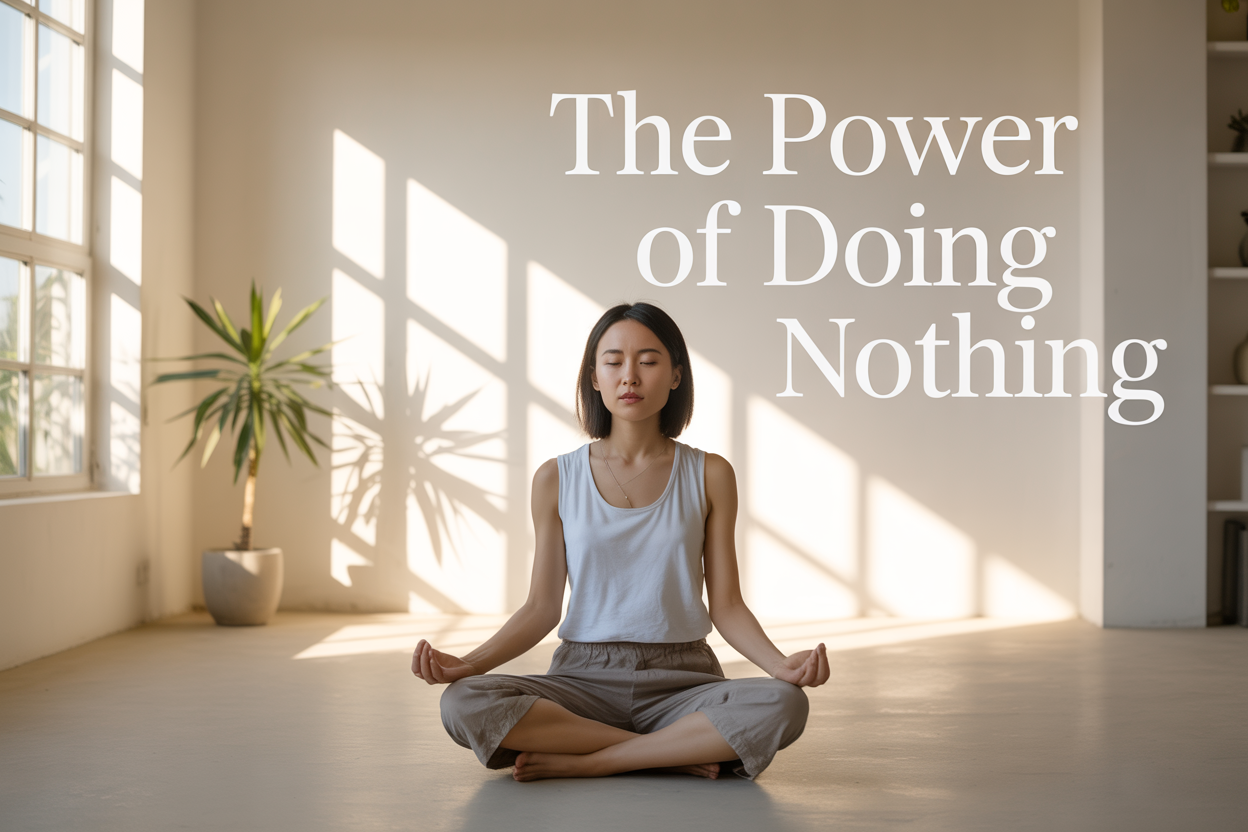
The Power of Doing Nothing: Why Rest Is Your Secret Weapon
This guide is for busy professionals, overwhelmed parents, and anyone caught in the endless cycle of productivity pressure who wants to reclaim their mental clarity and well-being without guilt.
Rest isn’t laziness, it’s a strategic choice that can transform how you think, decide, and connect with others. While productivity culture pushes us to fill every moment with action, science shows that intentional stillness practices actually boost our performance and happiness.
We’ll explore the fascinating research behind mental clarity through rest and why your brain needs downtime to function at its best. You’ll also discover how to break free from productivity culture myths that keep you trapped in constant motion, and learn practical strategies for embracing strategic pauses in your daily life.
By the end, you’ll understand how presence in relationships creates deeper connections and why the benefits of rest extend far beyond just feeling refreshed. Ready to discover why doing nothing might be the most productive thing you can do?

Your brain doesn’t actually stop working when you’re doing nothing; it just switches into a different mode. During downtime, your mind activates what scientists call the default mode network (DMN), a collection of brain regions that become highly active when you’re not focused on any specific task. Think of it as your brain’s screensaver, but instead of just sitting idle, it’s busy making connections, consolidating memories, and processing the day’s experiences.
This network includes key areas like the medial prefrontal cortex, posterior cingulate cortex, and angular gyrus. When these regions work together during rest, they help you make sense of your experiences, plan for the future, and even understand yourself better. Brain imaging studies show that during these quiet moments, your mind is actually consuming almost as much energy as when you’re actively problem-solving.
The benefits of rest become clear when you understand that this downtime processing helps strengthen neural pathways and creates new connections between seemingly unrelated ideas. Your brain literally rewires itself during these periods, making you more creative and better at solving complex problems later.
Boredom gets a bad rap in our always-connected world, but neuroscience reveals it’s actually a powerful catalyst for creativity and self-reflection. When your mind starts to wander, you’re not being lazy or unproductive – you’re giving your brain permission to explore new territories and make unexpected connections.
Research using fMRI scans shows that during boredom, your brain’s executive attention network relaxes its grip, allowing the default mode network to take center stage. This shift enables what researchers call “divergent thinking”, the ability to generate multiple creative solutions to a single problem. Studies have found that people who engage in boring tasks before creative challenges consistently outperform those who jump straight into problem-solving.
Mind-wandering also plays a crucial role in emotional regulation and self-awareness. During these unfocused moments, your brain processes emotional experiences, helps you understand your motivations, and even rehearses future social interactions. People who regularly allow their minds to wander show increased activity in brain regions associated with empathy and moral reasoning.
Your brain’s creativity depends on having space to breathe and make connections. When you’re constantly consuming information or jumping between tasks, you’re essentially keeping your mind in a state of reactive mode, where it can only respond to immediate stimuli rather than generate original thoughts.
Constant stimulation floods your prefrontal cortex with information, overwhelming its capacity to process and integrate new ideas effectively. This creates what researchers call “cognitive overload,” where your brain becomes so busy managing incoming data that it can’t step back to see patterns or generate creative solutions.
The impact on creativity is measurable. Studies comparing groups with different levels of media consumption show that those with constant stimulation score significantly lower on creativity tests. Their brains become addicted to the dopamine hits from new information, making it increasingly difficult to tolerate the temporary discomfort of not knowing or not being entertained.
Your productivity is a trap. Here is your way out. If you’re tired of performing and ready to start connecting, this is the manual you didn’t know you needed. Join thousands of others who have reclaimed their time and their sanity. Get Your Copy of “The Power of Doing Nothing”
Mental clarity through rest emerges when you give your brain regular breaks from stimulation. Even short periods of unstimulated time, like a five-minute walk without your phone, can reset your cognitive abilities and restore creative thinking capacity.
Scientific research on meditation has exploded over the past two decades, revealing profound changes in brain structure and function. Regular meditation practice literally reshapes your brain, increasing gray matter density in areas associated with attention, emotional regulation, and self-awareness while reducing activity in regions linked to stress and anxiety.
Neuroplasticity studies show that even beginners see measurable brain changes after just eight weeks of regular meditation practice. The anterior cingulate cortex, which helps with attention and emotional control, becomes more active and better developed. The amygdala, your brain’s alarm system, becomes less reactive to stress triggers.
Performance benefits are equally impressive. Meditation practitioners show enhanced working memory, improved sustained attention, and better cognitive flexibility. They’re also more resilient to mental fatigue and recover more quickly from stressful situations. Brain wave studies reveal that experienced meditators can achieve states of deep relaxation while maintaining alert awareness, a combination that’s optimal for both mental clarity and creative insight.
Long-term practitioners show even more dramatic changes, including increased cortical thickness and improved connectivity between brain regions. These structural changes translate into real-world benefits: better decision-making, enhanced emotional intelligence, and increased ability to maintain focus in distracting environments.

The modern world has convinced us that constant motion equals progress, but this toxic belief is destroying our well-being and actual productivity. Society celebrates the person who answers emails at midnight, works through lunch, and fills every spare moment with tasks. We wear exhaustion like a badge of honor, thinking burnout proves our worth.
This always-busy mindset creates a dangerous cycle. When you’re constantly rushing from one task to another, your brain never gets the downtime it needs to process information and recharge. Your stress hormones stay elevated, your creativity plummets, and your decision-making suffers. The very busyness you think makes you productive actually makes you less capable of doing quality work.
Signs you’re trapped in the always-busy trap:
Breaking free starts with recognizing that productivity culture myths have hijacked your natural rhythms. Your brain wasn’t designed to operate at full throttle all day. Even high-performance machines need maintenance breaks to function properly.
The counterintuitive truth about productivity is that strategic reduction often leads to exponential gains. When you constantly say yes to everything, you spread your energy so thin that nothing receives your best effort. Doing less allows you to channel your focus and creativity into what truly matters.
Think about the last time you had your best idea or solved a complex problem. Chances are, it didn’t happen during a frantic work session. Breakthrough moments typically arrive during walks, showers, or quiet reflection. These aren’t accidents; they’re the natural result of giving your mind space to make connections.
The power of selective focus shows up in several ways:
Professional athletes understand this principle intimately. They don’t train at maximum intensity every day because that leads to injury and decreased performance. Instead, they cycle between periods of intense effort and strategic recovery. Your mental and emotional energy operates the same way.
Companies that embrace this philosophy often outperform their always-on competitors. Google’s 20% time policy, which allows employees to work on passion projects, has led to some of the company’s most successful innovations. This isn’t despite reduced focus on assigned tasks – it’s because of it.
Rest isn’t the absence of productivity – it’s a different type of productive work that happens below the surface. When you permit yourself to truly disconnect, your brain begins essential maintenance tasks that improve your future performance.
During rest periods, your brain consolidates memories, processes emotions, and forms new neural connections. This cognitive housekeeping is impossible when you’re constantly feeding your mind new information and demands. Sleep research shows that people who rest properly solve problems 50% more effectively than those who push through fatigue.
Rest delivers measurable productivity benefits:
| Rest Activity | Productivity Benefit | Timeline |
|---|---|---|
| 10-minute meditation | Improved focus and attention | Immediate |
| Full night’s sleep | Enhanced memory and learning | Next day |
| Weekend digital detox | Restored creativity and motivation | Following week |
| Vacation time | Increased innovation and job satisfaction | Long-term |
Stop failing at being still. You’ve been told that being “busy” is a badge of honor, but it’s actually killing your connections. Discover the counterintuitive secret to winning by doing absolutely nothing. Unlock the Power of Doing Nothing
Your nervous system operates in two modes: sympathetic (fight-or-flight) and parasympathetic (rest-and-digest). Chronic busyness keeps you stuck in sympathetic mode, which impairs immune function, disrupts sleep, and clouds judgment. Regular rest activates your parasympathetic system, allowing your body and mind to repair and optimize.
Strategic rest also prevents decision fatigue, the phenomenon where your ability to make good choices deteriorates throughout the day. By building in recovery periods, you maintain higher-quality decision-making when it matters most. This isn’t indulgence, it’s intelligent resource management.
The most successful leaders and entrepreneurs understand that overcoming productivity pressure requires embracing rest as a competitive advantage. They schedule downtime as carefully as they schedule meetings because they know that mental clarity through rest drives better results than grinding through exhaustion.

Your environment shapes your ability to embrace intentional stillness, and creating dedicated spaces for rest transforms how effectively you can disconnect from constant demands. Start by identifying one corner of your home, whether it’s a reading chair, a cushion by the window, or even a specific spot on your couch, and designate it as your stillness sanctuary. Remove visual distractions like electronics, work materials, or anything that triggers your productivity mindset.
The magic happens when you consistently return to this same physical space for unstructured time. Your brain begins associating this location with rest, making it easier to shift into a calm state. Keep a soft blanket, perhaps a journal for thoughts that arise naturally, and maybe a plant or candle to create a sensory anchor. The goal isn’t perfection, it’s consistency in having somewhere you can simply be.
Time boundaries matter just as much as physical ones. Block out 15-30 minutes daily where you commit to doing absolutely nothing productive. Treat this appointment with yourself as seriously as you would any important meeting. During this time, resist the urge to organize, plan, or solve problems. Just exist in your chosen space and let your mind wander.
Your devices constantly fragment your attention, making true stillness nearly impossible when they’re within reach. Implementing strategic digital boundaries creates the mental space necessary for genuine rest. Start with designated phone-free zones in your home, particularly your bedroom and dining area, where conversations and quiet moments can flourish without digital interruption.
Create specific windows throughout your day when you’re completely offline. Morning hours before checking emails allow your mind to wake up naturally rather than immediately jumping into reactive mode. Evening cutoffs give your brain time to process the day’s experiences without additional input flooding your system.
Use your phone’s built-in tools to support these boundaries. Enable “Do Not Disturb” modes during your stillness practices, and consider apps that block social media during designated quiet hours. Place charging stations away from areas where you rest, making it inconvenient to mindlessly grab your device.
The withdrawal from constant connectivity might feel uncomfortable initially, but this discomfort signals your brain’s addiction to stimulation. Push through this phase, most people discover that after a week of consistent digital boundaries, they naturally crave these unplugged moments.
Breath control offers the fastest pathway to activating your body’s relaxation response, requiring no special equipment or extended time commitment. The 4-7-8 technique works particularly well for busy schedules: inhale through your nose for four counts, hold for seven, then exhale slowly through your mouth for eight counts. Repeat this cycle three to four times whenever you need immediate stress relief.
Box breathing provides another powerful tool, especially during work transitions. Breathe in for four counts, hold for four, exhale for four, then hold empty for four counts before repeating. This technique helps reset your nervous system between tasks or meetings, creating micro-moments of stillness throughout your day.
For deeper relaxation sessions, try the physiological sigh: take a normal inhale, then add a second, smaller inhale on top of the first one, followed by a long, slow exhale. This pattern specifically targets the vagus nerve and quickly shifts your body from stress mode to rest mode.
Protecting your rest requires the same assertiveness you’d use to defend any other important commitment. Start by clearly communicating your stillness practice to family members, roommates, or colleagues who might interrupt these moments. Explain that this time directly impacts your ability to show up fully in other areas of your life.
Learn to say no to requests that encroach on your designated rest periods. When someone asks for your time during these blocked-out moments, respond with something like “I’m not available then, but I can help you at [specific alternative time].” This approach maintains relationships while protecting your boundaries.
Set realistic expectations with yourself about consistency. Missing a day doesn’t mean failure; it means you’re human. The power of doing nothing grows stronger with regular practice, but perfectionism around rest defeats its purpose. Aim for progress, not perfection.
Body-based relaxation techniques help busy minds settle by giving them something concrete to focus on rather than racing thoughts. Progressive muscle relaxation involves systematically tensing and releasing different muscle groups, starting with your toes and working upward. Tense each area for five seconds, then release and notice the contrast between tension and relaxation.
The body scan method works well for time-pressed schedules because you can do it lying down, sitting, or even standing. Simply move your attention slowly through different parts of your body, noticing sensations without trying to change anything. This practice cultivates present-moment awareness while allowing your mind to step away from problem-solving mode.
Here is your way out. If you’re tired of performing and ready to start connecting, this is the manual you didn’t know you needed. Join thousands of others who have reclaimed their time and their sanity. Get Your Copy of “The Power of Doing Nothing”
For professionals who struggle with traditional meditation, try movement-based stillness practices. Walking meditation, gentle stretching, or even mindful dishwashing can provide the mental reset benefits of intentional stillness while satisfying your need to accomplish something. The key lies in maintaining awareness of the present moment rather than letting your mind drift to future tasks or past concerns.

When you’re stuck in the thick of a problem, your brain operates like a spotlight with a narrow beam. You see only what’s directly in front of you, missing the broader landscape where creative solutions often hide. Strategic pauses work like stepping back from a painting in a museum – suddenly, patterns emerge that were invisible up close.
Your prefrontal cortex, the brain’s executive center, becomes overwhelmed when processing complex decisions under pressure. This cognitive overload creates tunnel vision, limiting your ability to see alternative approaches. Taking a deliberate break allows your default mode network to activate – the brain’s background processing system that connects disparate ideas and generates unexpected insights.
Think about those “aha!” moments that hit you in the shower or during a walk. They don’t happen by accident. When you stop actively trying to solve a problem, your subconscious continues working on it, making connections your conscious mind couldn’t see. This process, called incubation, is why some of history’s greatest breakthroughs came during moments of apparent inactivity.
The most successful leaders understand this principle intuitively. Instead of making knee-jerk reactions to challenges, they create space between stimulus and response. This gap allows them to see options that panic and urgency would have obscured completely.
Impulsive decisions feel urgent in the moment but often create lasting regret. The space between feeling an impulse and acting on it is where wisdom lives. Strategic pauses give your rational mind time to catch up with your emotional reactions.
Your brain’s limbic system triggers fight-or-flight responses that push for immediate action. While this served our ancestors well when facing physical threats, it wreaks havoc on modern decision-making. That email that makes your blood boil, the investment opportunity that seems too good to pass up, the relationship conflict that demands immediate resolution – all benefit from the cooling effect of intentional stillness.
Consider implementing a 24-hour rule for any decision involving significant money, relationships, or career changes. This simple practice has saved countless people from choices they’d later regret. The pause doesn’t guarantee you’ll change your mind, but it ensures your decision comes from a place of clarity rather than reactive emotion.
Professional negotiators use strategic silence as a powerful tool. When the other party makes an offer, experienced negotiators often remain quiet, creating space for better terms to emerge. The same principle applies to personal decisions – silence often reveals information and options that rushed responses would miss.
Sleep isn’t just rest for your body – it’s a sophisticated decision-making tool. During sleep, your brain consolidates information, processes emotions, and strengthens neural pathways related to problem-solving. The phrase “sleep on it” exists because humans have intuitively understood this process for centuries.
Research shows that sleep enhances creative problem-solving by up to 60%. Your brain literally rewires itself during rest, forming new connections between previously unrelated concepts. This neuroplasticity means you often wake up with fresh perspectives on challenges that seemed insurmountable the night before.
REM sleep, in particular, plays a crucial role in emotional regulation and memory consolidation. When facing decisions with strong emotional components, sleep helps separate the facts from the feelings, allowing you to see situations more objectively. The decision that felt overwhelming at midnight often appears manageable in the morning light.
Smart decision-makers schedule important choices around their sleep cycles. Instead of rushing toward immediate answers, they use bedtime as a natural pause point. This approach works for everything from career moves to relationship decisions to major purchases. Your unconscious mind works through the night, often delivering clarity that no amount of conscious analysis could provide.
The power of doing nothing extends beyond simple rest – it becomes a strategic advantage in navigating life’s complex choices. Each pause creates space for wisdom to emerge, transforming how you approach decisions both big and small.

When you truly listen to someone, you’re giving them something far more valuable than advice or solutions – you’re offering your complete attention. Deep listening goes beyond hearing words; it means putting down your phone, quieting your internal commentary, and creating space for another person’s experience to unfold.
The power of doing nothing in conversations transforms relationships in unexpected ways. Instead of rushing to fill every pause with your own thoughts or stories, try sitting comfortably in moments of silence. These pauses often invite deeper sharing, allowing your loved ones to process their feelings and express what really matters to them.
Practice these deep listening techniques:
You have permission to stop. Real intimacy doesn’t happen in the hustle; it happens in the silence. Grab the guide that teaches you how to turn “nothing” into your greatest strength.
GIVE ME THE POWER OF NOTHING
When conflicts arise, the instinct is to defend, explain, or counter-attack. Deep listening requires stepping back from this reactive pattern. Your presence becomes a gift that allows tension to dissolve naturally, creating room for understanding to emerge.
Quality time isn’t about quantity – it’s about the depth of connection you create during shared moments. Building lasting bonds requires intentional stillness practices that help you show up fully for the people who matter most.
Consider these presence-focused activities:
| Activity | Benefits | Time Required |
|---|---|---|
| Device-free meals | Encourages natural conversation | 30-60 minutes |
| Walking together | Creates a relaxed sharing environment | 20-45 minutes |
| Sitting in nature | Reduces stress, promotes openness | 15-30 minutes |
| Shared silence | Builds comfort with each other’s presence | 5-15 minutes |
The magic happens when you stop trying to make every moment productive or entertaining. Simply being together without an agenda allows authentic connections to flourish. Your relationships strengthen when people feel they can be themselves around you without performance or pretense.
Create regular rituals that prioritize presence over productivity. Morning coffee without rushing, evening walks without discussing logistics, or bedtime conversations that explore feelings rather than tomorrow’s schedule. These moments of intentional stillness become the foundation for deeper intimacy.
Most relationship conflicts escalate because people feel unheard and misunderstood. When you bring complete presence to challenging conversations, you interrupt the cycle of reactivity that fuels arguments.
Being fully present means:
Strategic pauses during heated discussions work like relationship magic. When tensions rise, a simple “Let me take a moment to really understand what you’re saying” can completely shift the dynamic. This pause isn’t avoidance – it’s wisdom.
Presence in relationships also means recognizing when your own emotional state is clouding your ability to connect. If you’re stressed, distracted, or overwhelmed, acknowledge this reality instead of pretending to be available. Your honesty about your current capacity actually builds trust and prevents misunderstandings.
The benefits of rest extend beyond personal well-being into relationship health. When you’re well-rested and mentally clear, you respond rather than react. You listen with genuine curiosity rather than preparing your defense. You offer compassion instead of criticism.
Practice the art of doing nothing together. Sit on the couch without the television. Take drives without destinations. Share meals without phones. These moments of shared stillness create the conditions for genuine intimacy to emerge naturally.

Rest isn’t laziness, it’s a superpower that our brains desperately need to function at their best. When we step away from the endless hustle and allow ourselves moments of genuine stillness, we create space for mental clarity, better decision-making, and deeper connections with the people we care about. The science backs this up: our minds do their most important work when we’re not forcing them to perform.
“The most productive thing you’ll do today is read this book.” Claim Your Peace Now
Your relationships, creativity, and overall well-being will thank you for building intentional pauses into your daily routine. Start small, put down your phone for ten minutes, take a walk without a podcast, or simply sit quietly with your morning coffee. These moments of doing “nothing” are actually doing everything your mind needs to reset, recharge, and show up as your best self in all areas of life.