Physical Address
304 North Cardinal St.
Dorchester Center, MA 02124


7 of the most profitable digital products you can create and sell in 2026 – ranked by earning potential
The digital product revolution is not coming. It is already here – and it is bigger than most people realise.
In 2026, the global creator economy is valued at over $234 billion, with digital products representing one of the fastest-growing and most accessible income streams for anyone with knowledge, a skill, or a creative idea. The rules are simple: create something once, sell it unlimited times, keep most of the profit, and let it earn while you sleep.
But not all digital products are created equal. Some are far easier to create, faster to sell, and more profitable than others – and choosing the right one from the start can mean the difference between your first sale in two weeks and your first sale in two years.
This guide ranks the 7 best digital products to sell online in 2026, based on current market demand, ease of creation for beginners, profit margin, and long-term income potential. Whether you are starting from zero or adding a new revenue stream to an existing business, this is your definitive roadmap.
$234.65B – Global creator economy value in 2026, growing at 22.5% annually
$124B+ – Digital goods sector revenue in 2026 alone
Up to 97% – Profit margin on digital products (no inventory, no shipping, no overhead)
And if you want the complete blueprint for creating your first profitable digital product from scratch, the Digital Products That Sell guide is available now – written specifically for beginners by Ifeyinwa C. Ofulue.
Before diving into the rankings, it is worth understanding why digital products stand apart from every other online income model – and why 2026 is the best time in history to start.
A physical product requires raw materials, manufacturing, storage, shipping, and ongoing restocking. A digital product requires none of those things. You invest time once to create it. After that, every sale is nearly pure profit. A single eBook written in three days can generate income for the next three years.
There is no warehouse, no packaging, no logistics, and no risk of unsold stock. Your product lives in the cloud and is delivered automatically the instant a buyer pays. Whether you sell one copy or ten thousand in a day, your costs remain the same.
A Selar store, a Gumroad listing, or your own website can sell to buyers in Lagos, London, New York, and Nairobi simultaneously. Digital products are uniquely borderless – your market is every person on the internet with a problem your product solves.
Tools like Claude AI and ChatGPT have compressed the time to create a high-quality digital product from months to days. An eBook that once took six weeks to research and write can now be drafted, edited, and formatted in a long weekend. Canva AI produces professional template designs in minutes. This acceleration is a massive advantage for anyone starting in 2026.
🌍 Perfect for African creators: Digital products are especially powerful for creators in Nigeria, Ghana, Kenya, and across Africa because they eliminate the logistics barriers of physical commerce entirely. Sell on Selar to local buyers and globally to international audiences – with the same product, on the same day.
eBooks are the most beginner-friendly digital product – and one of the most consistently profitable
eBooks and PDF guides consistently rank as the number one starting point for first-time digital product creators – and with good reason. They are fast to create, inexpensive to produce, easy to sell on virtually every platform, and capable of generating meaningful passive income with the right niche and positioning.
An eBook is any written guide, manual, how-to, or reference document delivered in digital format – typically PDF, ePub, or MOBI. The key insight most beginners miss is that buyers do not care about length. A focused, 25-page guide that solves one specific problem clearly and completely will outsell a vague 150-page book every time.
💡 Use Claude AI to write 10x faster Input your chapter outline and ask Claude to draft each section, then review and add your own voice and examples. A 30-page eBook can be drafted in a single weekend using this approach. See the full workflow at
Where to sell: Selar, Gumroad, Payhip, Amazon KDP, your own website
Profit margin: Up to 97% (platform transaction fee only)
Earning potential: $200–$5,000+/month with consistent promotion

Online courses command the highest prices and the deepest buyer commitment of any digital product
If eBooks are the entry point, online courses are the destination. Courses generate more revenue per sale than any other digital product type — and with the global eLearning market projected to reach over $320 billion in 2026, demand has never been stronger.
A course is a structured programme that takes a buyer from a starting point (beginner, struggling, stuck) to a defined outcome (skilled, earning, confident) through a series of video lessons, worksheets, and exercises. The key advantage of courses over eBooks is perceived value – buyers consistently pay ten to fifty times more for the same information when it is presented as a structured learning experience rather than a document.
One of the most common objections beginners raise is ‘I am not qualified enough.’ But course buyers do not need their teacher to have a PhD – they need someone who is two or three steps ahead of them and can explain the path clearly. If you have successfully done something – built a Selar store, learned a language, lost weight, started freelancing – you are qualified to teach it.
🎓 Selar’s course hosting is world-class: Unlimited video uploads, drip content scheduling, student progress tracking, completion certificates, and student management — all included with no monthly fee. It is the best course platform for African creators in 2026.
Profit margin: 85–95%
Earning potential: $1,000–$20,000+/month for established course creators
Templates save buyers hours of work – making them one of the most consistently purchased digital products
Templates are pre-designed, customisable files that save buyers significant time and effort. Instead of starting from scratch, the buyer purchases your template, adds their own content, and has a professional result in minutes rather than hours.
What makes templates especially appealing for creators is the speed of production. A Canva social media template pack that might take three to four hours to design can sell for $10–$40 and be purchased hundreds of times. The ratio of creation effort to total income is among the most favourable of any digital product type.
💡 Bundle everything A single Instagram template is worth $3. A bundle of 30 Instagram templates for fitness coaches, sold as ‘The Complete Fitness Creator Template Pack’, is worth $25–$40. Bundling increases perceived value dramatically without proportionally increasing your effort.
Best platforms: Selar, Etsy, Gumroad, Creative Market
Profit margin: Up to 97%
Earning potential: $300–$5,000+/month with a focused template library

AI prompt packs are 2026’s breakout digital product – high demand, fast to create, easy to sell
If there is one digital product category that has exploded in 2026, it is AI prompt packs. As millions of people begin using ChatGPT, Claude, Midjourney, and other AI tools for work, creativity, and business, the demand for expertly crafted prompts – instructions that reliably produce excellent AI outputs – has skyrocketed.
An AI prompt pack is a collection of tested, ready-to-use prompts organised around a specific use case. Examples include ‘100 ChatGPT prompts for social media managers’, ‘Claude prompts for writing and publishing eBooks’, or ‘Midjourney prompts for product photography backgrounds.’ Buyers pay for the time-saving value of prompts they do not have to figure out themselves.
🤖 Your next product idea is already in your hands: If you use Claude AI or ChatGPT regularly, the prompts you have already developed and refined are a digital product waiting to be packaged. Organise your best prompts by category, add instructions on how to use them, and you have a sellable product ready within a day.
Best platforms: Selar, Gumroad, Etsy, your own website
Profit margin: Up to 97%
Earning potential: $200–$3,000+/month with a targeted prompt library

Coaching and memberships generate the highest revenue per customer of any digital product type
Coaching and membership products occupy the premium end of the digital product spectrum. While eBooks and templates sell for $5–$40 and courses for $50–$500, coaching programmes regularly command $500–$5,000+ per client – and membership communities generate recurring monthly income that compounds powerfully over time.
The critical difference between coaching and other digital products is the level of personalisation and accountability. Buyers of coaching are not just purchasing information – they are purchasing direct access to your expertise, your feedback, and your support as they apply what they learn. That transformation is worth far more than any PDF or video series.
A membership site is one of the most powerful income models in digital business because it generates recurring monthly revenue – meaning you know in advance what you will earn next month. Selar’s subscription feature lets you create a membership product, gate content behind a paywall, and manage billing automatically.
Start with a simple monthly membership: new content each month (a tutorial, a live Q&A, a resources library), a community element (a private WhatsApp group, a Discord server), and a clear theme that keeps members returning (accountability, skill-building, business growth).
💡 Start with coaching before a course Coaching lets you understand exactly what your audience struggles with, what language they use to describe their problems, and what results they most want. Use those insights to build a course that sells itself — because it speaks directly to what you learned from coaching clients.
Best platforms: Selar (coaching sessions + subscriptions), Kajabi, Skool
Profit margin: 85–95%
Earning potential: $1,000–$10,000+/month combining coaching and membership
Your smartphone camera is a passive income machine – if you know what to shoot and where to sell
Stock media is one of the most genuinely passive digital income streams available. You create content once – a photograph, a video clip, an illustration, a piece of music – and earn royalties every time someone licenses it, potentially for years or decades.
Modern smartphones produce professional-quality images and video, making this accessible to anyone. The challenge is knowing what to create – not the most artistically impressive content, but the most commercially useful content that businesses, marketers, and content creators actually search for and buy.
📸 African imagery is in massive demand: Global brands actively seek authentic African lifestyle imagery and are willing to pay premium licensing fees for it. If you are based in Africa, your everyday environment – markets, street scenes, cultural events, family life – is commercially valuable content that is genuinely underserved on major stock platforms.
Profit margin: 60–90% depending on the platform
Earning potential: $100–$3,000+/month with a consistent and growing portfolio
Software products have the highest earning potential of any digital product category – and in 2026, creating simple software tools no longer requires years of coding experience. No-code and AI-assisted development tools have made it possible for non-developers to build and sell functional digital tools, calculators, generators, and browser extensions.
This is the most advanced category on this list, and not the right starting point for most beginners. But it is worth understanding because it represents where your digital product business could evolve over time.
For a complete guide to building software and tools without coding experience, see the How to Use Claude Code to Create Anything guide — available free at https://digitalprofit101.com.
Profit margin: 70–90%
Earning potential: $2,000–$50,000+/month for established software products
| Digital Product | Difficulty | Time to Create | Profit Margin | Earning Potential |
| eBooks / PDF Guides | Beginner | 1–3 days | Up to 97% | $200–$5,000+/mo |
| Online Courses | Intermediate | 1–3 weeks | 85–95% | $1,000–$20,000+/mo |
| Canva Templates | Beginner | Few hours | Up to 97% | $300–$5,000+/mo |
| AI Prompt Packs | Beginner | 1–2 days | Up to 97% | $200–$3,000+/mo |
| Coaching / Memberships | Intermediate | 1 week setup | 85–95% | $1,000–$10,000+/mo |
| Stock Media / Art | Beginner | Ongoing | 60–90% | $100–$3,000+/mo |
| Software / SaaS Tools | Advanced | Weeks–months | 70–90% | $2,000–$50,000+/mo |
With seven strong options on the table, the question is not which product is objectively best – it is which product is best for you, right now, given your knowledge, audience, and goals. Here is how to decide.
The fastest path to your first digital product sale is always the one that starts with existing knowledge. What do you know that others in your network regularly ask you about? What have you figured out that took you longer than it should have? That is your first product.
Who do you already have access to – on WhatsApp, Instagram, TikTok, LinkedIn, or in your community? What does that audience need most? A Canva template pack is perfect for an audience of content creators. A finance tracker spreadsheet is perfect for an audience focused on money management. Your first product should serve the people you already reach.
Whatever product you choose, finish it. The digital product graveyard is full of half-written eBooks, unfinished course outlines, and template packs that never got uploaded. A finished, published product at 80% quality will always outperform a perfect product that never launches. Ship, learn, improve.
💡 Your second product will be your best. First-time creators almost always underestimate their first product and overthink their second. The feedback, reviews, and buyer conversations from your first launch will tell you exactly what your second product should be – and it will be better, faster, and more profitable because of what you learned.
Creating your product is only half the equation. Where you sell it determines who discovers it, how much of the revenue you keep, and how easily you can scale.
Selar is the premier platform for digital creators in Nigeria, Ghana, Kenya, and across Africa. It supports local payment methods (Paystack, Flutterwave, bank transfer), accepts multiple currencies, charges no monthly fee, and includes built-in affiliate marketing, course hosting, and subscription billing.
It is also where the Digital Products That Sell guide is available – a real example of a digital product successfully listed and selling on the platform. See it at https://selar.com/digitalproducthatsell.
Both are beginner-friendly with low fees, global payment acceptance, and no monthly costs. Gumroad has a strong creator community and discovery features. Payhip offers a generous free plan with up to 97% revenue retention.
Etsy’s marketplace has a large, active buyer base specifically searching for digital downloads – templates, planners, printables, and creative assets. While it takes a percentage per sale, the built-in search traffic can drive significant organic sales over time.
Selling from your own WordPress or Shopify site keeps the highest percentage of revenue and gives you full control over branding, customer data, and marketing. Combine it with Selar or Gumroad for payment processing and delivery, and you have a professional, independent storefront.
Digital Products That Sell – the complete beginner’s guide at selar.com/digitalproducthatsell
This article gives you the overview. The complete guide – Digital Products That Sell – goes deep into every product type: how to validate your idea, how to create it from scratch, how to price it for maximum conversions, how to write product descriptions that sell, how to launch to your first buyers, and how to scale from your first product to a full digital product catalogue.
Written by Ifeyinwa C. Ofulue and published through DigitalProfit101, it is the practical, actionable blueprint that takes a complete beginner from ‘what should I sell?’ to ‘my first product is live and generating income.’
Pick up your copy today: https://selar.com/digitalproducthatsell
More free resources: https://digitalprofit101.com
📙 Ready to Create Your First Digital Product?
Digital Products That Sell — the complete step-by-step guide to choosing, creating, launching, and scaling a profitable digital product business. By Ifeyinwa C. Ofulue.
The biggest predictor of a digital product’s success is pre-existing demand. Before creating anything, validate your topic using Amazon bestseller lists, Google Trends, Selar’s marketplace, Etsy search, and the real questions people ask in Facebook Groups and Reddit communities in your niche.
Your title is your most important marketing asset. ‘Money Guide’ tells nobody anything. ‘How to Save Your First ₦1 Million on a ₦150,000 Monthly Salary: A 12-Month Plan’ tells your exact target buyer exactly what they will get. Be specific, be benefit-led, and include a concrete outcome.
Low prices attract low-commitment buyers who are less likely to use your product, less likely to get results, and less likely to leave positive reviews. Price based on the value of the outcome you deliver – not the number of pages, the hours it took you to create, or what you personally would pay. A confident price signals a confident product.
No platform – not Selar, not Etsy, not Gumroad – will do your marketing for you. Every successful digital product seller invests consistent effort in promoting their products: daily WhatsApp status posts, regular social media content, email list nurturing, and affiliate recruitment. Traffic is your job. The platform is just the checkout.
The digital product income curve is not linear. It is slow at first, then compounds. The creators earning ₦500,000 per month on Selar in 2026 were earning ₦20,000 per month in their first 30 days. They did not quit. They kept publishing, promoting, and improving. Consistency over three to six months produces results that sporadic effort over three to six years never will.
The technology to create a professional digital product is free. The platforms to sell it are free to join. The market of buyers looking for what you know and what you can create has never been larger. The only thing standing between you and your first digital product income is the decision to start.
Pick one product type from this guide. Choose the niche where you have real knowledge or genuine curiosity. Block two hours this weekend to create your first draft, your first template, or your first course outline. You will be surprised how quickly a starting point becomes a published product – and how quickly a published product becomes a sale.
Two resources to make it happen:
📙 The complete Digital Products blueprint: https://selar.com/digitalproducthatsell
📚 Free guides and strategies: https://digitalprofit101.com
The best digital product to sell in 2026 is the one you finish and publish. Start today.
📙 Ready to Create Your First Digital Product?
Digital Products That Sell — the complete step-by-step guide to choosing, creating, launching, and scaling a profitable digital product business. By Ifeyinwa C. Ofulue.
👉 Get your copy now: https://selar.com/digitalproducthatsell
📚 Free guides & resources: https://digitalprofit101.com
eBooks and Canva templates are the easiest starting points. Both can be created without technical skills, in a matter of days, and uploaded to a selling platform like Selar or Gumroad immediately. AI tools like Claude and ChatGPT make eBook creation even faster – a focused 20–30 page guide can be drafted in a weekend.
No. Platforms like Selar, Gumroad, and Payhip give you a complete storefront without requiring your own website. You get a unique store URL, automated product delivery, payment processing, and sales analytics – all included for free. A website becomes useful as you scale, but it is not required to start earning.
Earnings vary widely. Beginners typically earn $50–$500 in their first month with active promotion. By month 3–6, creators with consistent marketing and growing social proof regularly reach $500–$2,000 per month. Sellers with a product catalogue, email list, and affiliate network regularly exceed $5,000–$10,000+ per month. Income compounds significantly with each new product you add.
Yes — Selar is built specifically for this. It accepts Nigerian Naira payments via Paystack, Flutterwave, and bank transfer, and pays out directly to your Nigerian bank account, often within 24 hours of a sale. You can also sell internationally and receive payments in USD through PayPal or Stripe.
Your fastest route to a first sale is always your existing network. Announce your product on WhatsApp status and broadcast lists, post about it on Instagram or TikTok with a direct link, and directly message people who have expressed interest in your topic. Your first buyer is almost always someone who already knows, likes, and trusts you.
Visit DigitalProfit101.com for free guides, tutorials, and strategies across every aspect of digital income. For the complete step-by-step blueprint to creating your first profitable digital product, get your copy of Digital Products That Sell at https://selar.com/digitalproducthatsell.
Published on DigitalProfit101.com | Category: Making Money Online / eCommerce Solutions



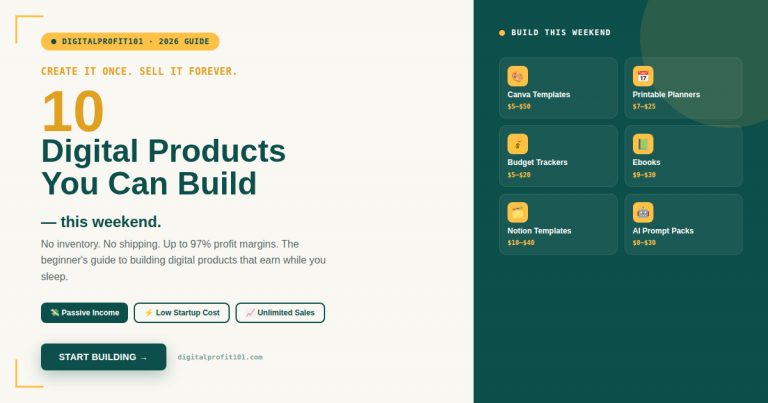
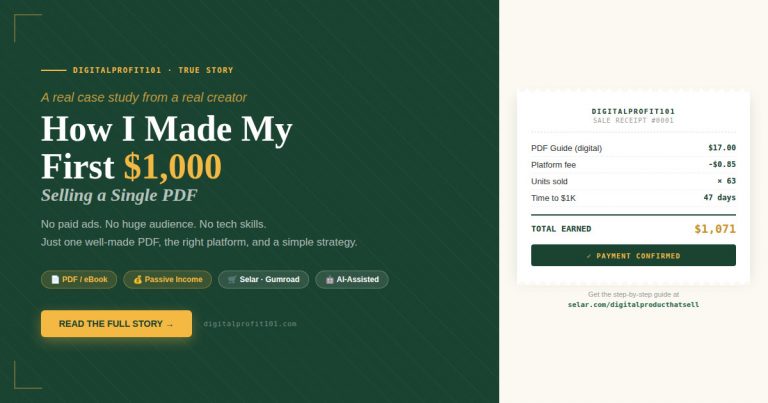
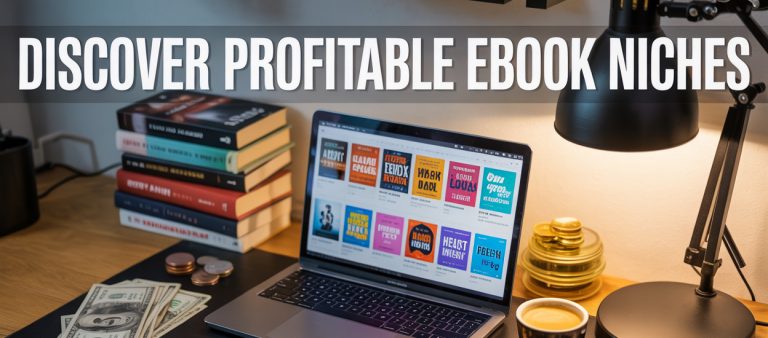



The point about choosing the right digital product from the start is often overlooked. A lot of creators focus on profit potential alone, but matching a product to an audience’s specific problem usually leads to faster validation and more sustainable sales. It will be interesting to see how those rankings hold up as buyer expectations continue to evolve in 2026.