Physical Address
304 North Cardinal St.
Dorchester Center, MA 02124

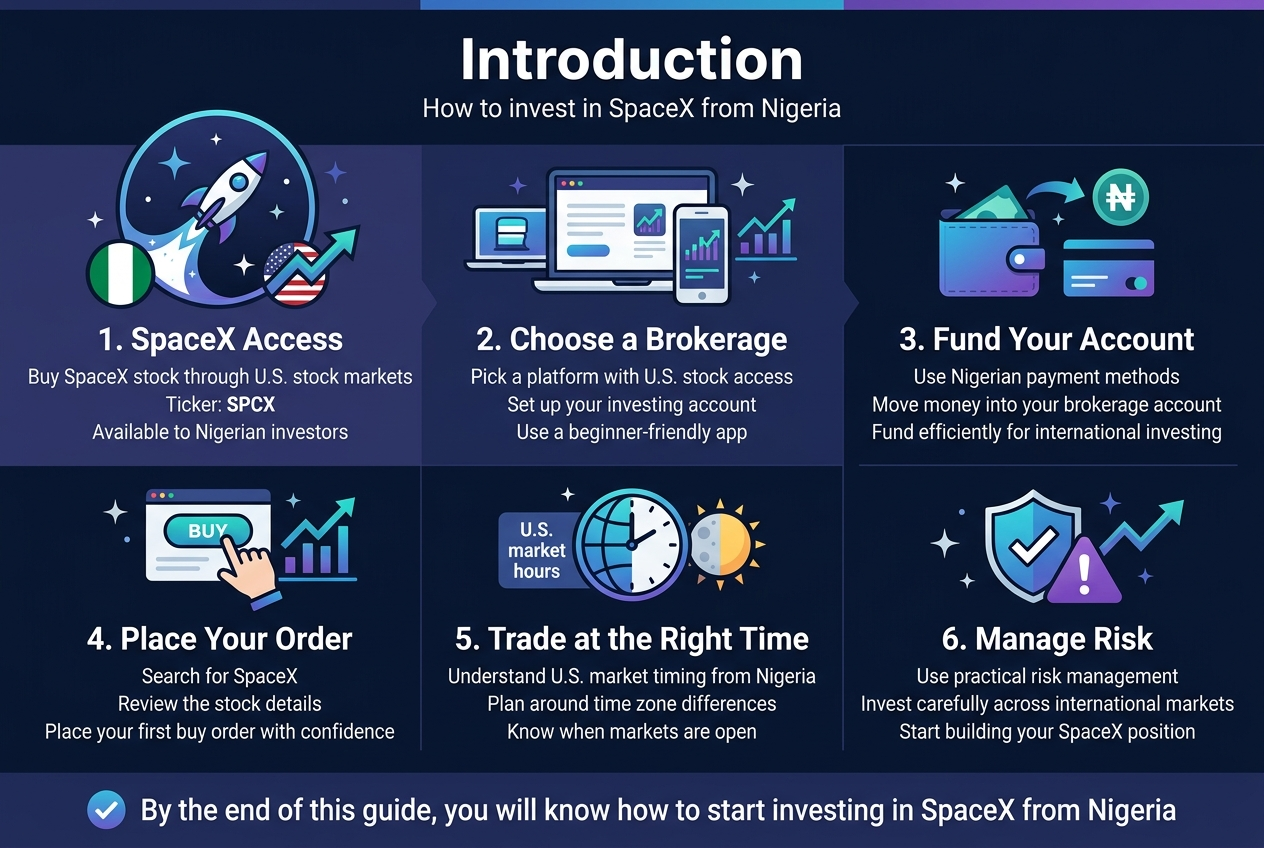
You can now invest in SpaceX from Nigeria, but don’t know where to start? You’re not alone. With SpaceX trading under the ticker SPCX, Nigerian investors now have access to one of the world’s most exciting space companies through U.S. stock markets.
This guide is designed for Nigerian investors who want to buy SpaceX stock but need a clear roadmap to navigate international investing. Whether you’re a complete beginner or someone who’s invested locally but never touched foreign markets, we’ll break down the entire process step-by-step.
We’ll walk you through choosing the right brokerage platform that gives you seamless access to U.S. stocks, show you how to fund your account efficiently using Nigerian payment methods, and explain the actual stock purchase process so you can place your first SpaceX order with confidence. Plus, we’ll cover the timing aspects of trading U.S. markets from Nigeria and share practical risk management tips that every international investor should know.
By the end of this guide, you’ll have everything you need to start building your SpaceX position from right here in Nigeria.
Several investment platforms have gained popularity among Nigerian investors for accessing US markets. Bamboo stands out as one of the most user-friendly options, offering commission-free trades on US stocks with a clean mobile interface. The platform supports both full and fractional shares, making it accessible for investors with varying budget sizes.
Chaka provides another solid option with competitive pricing and a wide range of US stocks. Their platform focuses on education and community features, helping new investors understand market dynamics. The app includes research tools and market insights tailored for African investors.
Raenest (formerly RiseVest) offers diversified investment options including individual stocks, ETFs, and pre-built portfolios. Their dollar-cost averaging feature helps investors build positions gradually over time.
Trove Finance has built a strong reputation for reliability and customer service. They offer access to over 10,000 US stocks and ETFs with transparent pricing structures.
| Platform | Commission Structure | Minimum Investment | Key Features |
|---|---|---|---|
| Bamboo | $0 commission | $1 | Fractional shares, educational content |
| Chaka | $0 commission | $10 | Research tools, community features |
| Raenest | Management fees apply | $10 | Portfolio options, automated investing |
| Trove | Trading fees vary | $10 | Wide selection, reliable execution |
Understanding fee structures can significantly impact your long-term investment returns. Most Nigerian-friendly brokers have moved away from traditional per-trade commissions, but other costs still apply.
Trading Commissions: Many platforms now offer zero-commission trading for US stocks, but some charge between $1-$5 per trade. Always check if there are minimum trade amounts that trigger fees.
Currency Conversion Costs: This represents one of the biggest ongoing expenses. Platforms typically charge 0.5% to 2.5% for converting Naira to US dollars. Some brokers offer more competitive rates for larger transactions.
Account Maintenance Fees: Most platforms don’t charge monthly account fees, but some impose inactivity fees if you don’t trade for extended periods. Raenest charges management fees for their portfolio services, typically ranging from 0.5% to 1% annually.
Withdrawal Fees: Moving money back to your Nigerian bank account often incurs charges ranging from $5 to $25, plus potential receiving bank fees.
Hidden Costs: Watch out for spread markups on currency conversion and potential charges for dividend payments or corporate actions.
Security should be your top priority when choosing an investment platform. Look for brokers regulated by recognized financial authorities.
Regulatory Status: Reputable platforms typically hold licenses from the Securities and Exchange Commission (SEC) in Nigeria or international bodies like the UK’s Financial Conduct Authority (FCA). Bamboo is registered with both Nigerian and US regulators, while Chaka holds SEC Nigeria registration.
Insurance Coverage: Check if your investments are protected by insurance schemes. Some platforms partner with US broker-dealers that provide SIPC insurance, protecting up to $500,000 in securities per account.
Data Security: Strong platforms use bank-level encryption, two-factor authentication, and secure servers. Look for SSL certificates and clear privacy policies explaining how your data gets handled.
Fund Custody: Your money should be held in segregated accounts, separate from the broker’s operating funds. This protects your investment even if the platform faces financial difficulties.
Transparency: Reliable brokers provide clear information about their regulatory status, fee structures, and terms of service. Avoid platforms that seem evasive about their licensing or operational details.
Quality customer support becomes crucial when dealing with international investments and potential time zone differences.
Response Times: Test the platform’s response time before committing significant funds. Send a few questions through their support channels to gauge how quickly and thoroughly they respond.
Support Channels: Look for multiple contact options including email, live chat, phone support, and in-app messaging. Platforms with local Nigerian phone numbers or WhatsApp support often provide more accessible help.
Operating Hours: Check if customer support operates during Nigerian business hours. Some platforms offer 24/7 support, while others only provide assistance during US business hours, which could be challenging for urgent issues.
Local Knowledge: Support teams familiar with Nigerian banking systems, regulations, and common investor questions can resolve issues more efficiently. Platforms with local offices or dedicated Nigerian support teams often provide superior service.
Educational Resources: Strong platforms offer webinars, tutorials, and educational content specifically designed for Nigerian investors. This reduces the need for basic support requests and helps you make informed decisions.
Community Features: Some brokers maintain active social media presence or community forums where users can share experiences and get peer support alongside official customer service.
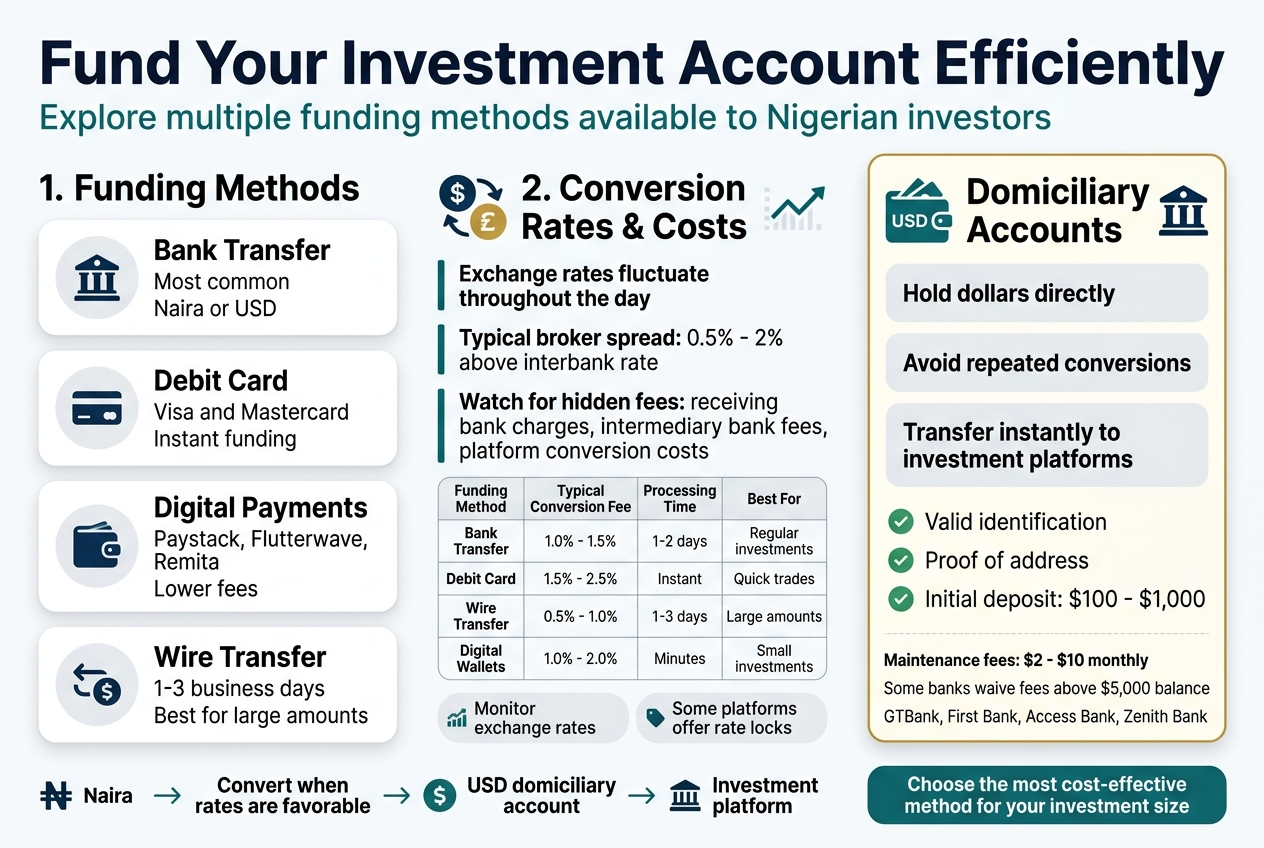
Nigerian investors have several pathways to fund their investment accounts for US stock purchases. Bank transfers remain the most common method, allowing you to move funds directly from your local Nigerian bank account to your investment platform. Most brokers accept transfers in both Naira and US dollars, though dollar transfers typically process faster and avoid multiple currency conversions.
Debit cards offer another convenient option, particularly those linked to domiciliary accounts or international payment providers. Many platforms accept Visa and Mastercard payments, enabling instant account funding. Some investors prefer using virtual dollar cards from providers like Kuda, GTBank, or other Nigerian fintech companies, which offer competitive rates and quick processing times.
Mobile money and digital payment solutions have gained popularity among younger investors. Platforms like Paystack, Flutterwave, and Remita integrate with various investment brokers, providing seamless funding experiences. These options often come with lower fees compared to traditional banking channels.
For larger investments, wire transfers through correspondent banking relationships provide security and reliability. Though they take 1-3 business days to process, they’re ideal for substantial amounts and offer better exchange rates than smaller transaction methods.
Currency conversion represents one of the biggest cost factors when investing in US stocks from Nigeria. Exchange rates fluctuate throughout the day, and the timing of your conversion can significantly impact your purchasing power. Most investment platforms use real-time market rates, but they typically add a spread of 0.5% to 2% above the interbank rate.
| Funding Method | Typical Conversion Fee | Processing Time | Best For |
|---|---|---|---|
| Bank Transfer | 1.0% – 1.5% | 1-2 days | Regular investments |
| Debit Card | 1.5% – 2.5% | Instant | Quick trades |
| Wire Transfer | 0.5% – 1.0% | 1-3 days | Large amounts |
| Digital Wallets | 1.0% – 2.0% | Minutes | Small investments |
Smart investors monitor exchange rates and time their funding during favorable market conditions. The Central Bank of Nigeria’s official rate often differs from parallel market rates, so understanding which rate your broker uses helps you budget accurately. Some platforms offer rate locks, allowing you to secure favorable exchange rates for future transactions.
Hidden fees can eat into your returns. Watch for receiving bank charges, intermediary bank fees, and platform-specific conversion costs. Reading the fine print reveals these charges upfront, helping you choose the most cost-effective funding method for your investment size.
Domiciliary accounts streamline the investment process by eliminating repeated currency conversions. These USD-denominated accounts, available at most Nigerian banks, let you hold dollars directly and transfer them to investment platforms without conversion delays.
Opening a domiciliary account requires basic documentation: valid identification, proof of address, and initial deposit requirements that vary by bank. GTBank, First Bank, Access Bank, and Zenith Bank offer competitive domiciliary account packages with different minimum balance requirements ranging from $100 to $1,000.
The main advantage lies in timing flexibility. You can convert Naira to dollars when rates favor you, then hold those dollars until investment opportunities arise. This strategy protects against adverse exchange rate movements and reduces transaction costs for frequent investors.
Maintenance fees for domiciliary accounts typically range from $2 to $10 monthly, depending on your bank and account balance. These costs often pay for themselves through reduced conversion fees and better rate control. Some banks waive maintenance fees for accounts maintaining minimum balances above $5,000.
Link your domiciliary account directly to your investment platform for instant transfers. This setup eliminates waiting periods and provides real-time funding capability when market opportunities emerge. Many brokers offer preferential rates for customers funding through domiciliary accounts, recognizing the reduced processing complexity.
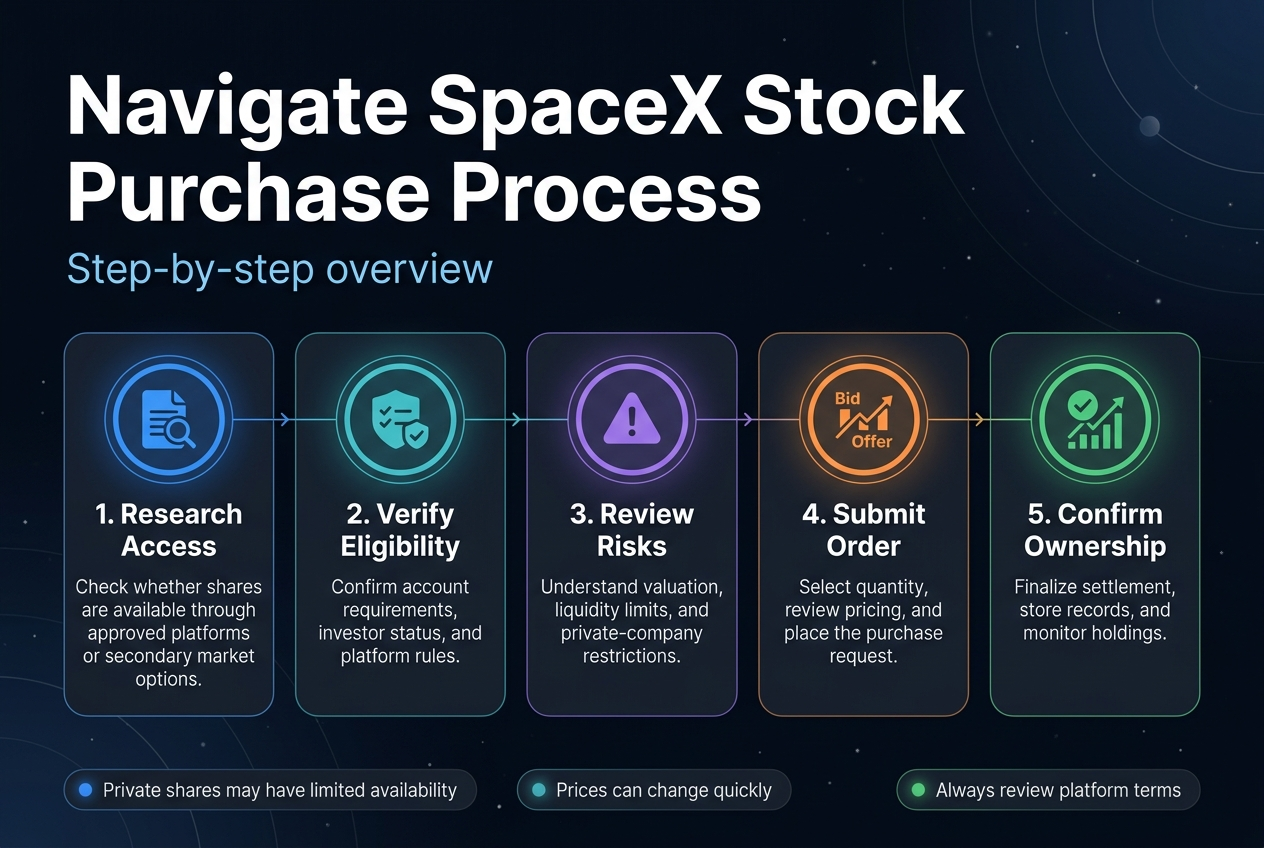
Finding SPCX on your investment platform should be straightforward once you’ve logged into your account. Most Nigerian-friendly brokers like Bamboo, Chaka, or Raenest feature a search bar prominently displayed on their main dashboard. Simply type “SPCX” or “SpaceX” into the search field, and the stock should appear in the results.
The ticker symbol SPCX represents SpaceX’s public trading designation, making it easily identifiable across all major platforms. When you click on the search result, you’ll see essential information including the current stock price, daily price movements, trading volume, and basic company details.
Some platforms display additional data like price charts, analyst ratings, and financial metrics. Take time to familiarize yourself with this information layout, as you’ll reference it frequently when making investment decisions. If you’re having trouble locating the stock, check that your broker offers access to the specific exchange where SPCX trades, as some platforms have limited market coverage.
Your choice between full and fractional shares depends on your available capital and investment strategy. Full shares give you complete ownership units of SpaceX stock, while fractional shares let you own a percentage of a single share.
Fractional investing opens doors for investors with smaller budgets. If SPCX trades at $200 per share but you only have $50 to invest, fractional shares allow you to purchase 0.25 shares instead of waiting until you can afford a full share. This approach helps you start building your position immediately rather than missing potential price movements while saving up.
However, full shares offer certain advantages. You’ll receive complete dividend payments (if SpaceX pays dividends in the future), and some corporate voting rights typically require full share ownership. Additionally, transferring full shares between brokers is usually easier than moving fractional positions.
| Investment Type | Minimum Investment | Voting Rights | Dividend Rights | Transfer Flexibility |
|---|---|---|---|---|
| Full Shares | Full share price | Yes | Complete | High |
| Fractional Shares | Any amount | Limited/None | Proportional | Limited |
Smart SpaceX investing starts with an honest financial assessment. Determine how much money you can afford to lose without affecting your daily expenses, emergency fund, or other financial goals. This amount represents your risk capital for stock investments.
Consider your investment timeline when setting your budget. SpaceX operates in the volatile aerospace industry, where stock prices can swing dramatically based on launch successes, contract announcements, or regulatory changes. If you need this money within the next year, SpaceX might not match your risk profile.
A practical approach involves the “5% rule” – never invest more than 5% of your total investment portfolio in a single stock, regardless of how promising it seems. This prevents any one company’s performance from devastating your financial future.
Factor in currency exchange risks since you’re investing from Nigeria. Naira fluctuations against the dollar can impact your returns even if SPCX performs well. Some investors allocate extra funds to buffer against unfavorable exchange rate movements.
Create a written investment plan specifying your entry price targets, profit-taking levels, and stop-loss points. This removes emotional decision-making when market volatility hits your position.
When you’re ready to buy SpaceX stock (SPCX), you’ll need to decide what type of order works best for your situation. Market orders are the most straightforward option – they execute immediately at whatever price the stock is currently trading. This means if SPCX is trading at $85 per share when you submit your market order, you’ll buy shares at or very close to that price.
Market orders work great when you want to get into the stock quickly and aren’t too concerned about paying a few dollars more or less. They’re perfect for long-term investors who plan to hold SpaceX shares for months or years. The main advantage is speed and certainty – your order gets filled almost instantly during market hours.
However, keep in mind that stock prices can move quickly. Between the time you see a price on your screen and when your order processes, the actual purchase price might be slightly different. This price variation is usually minimal for established stocks like SpaceX, but it’s something to be aware of.
Limit orders give you much more control over what you pay for SPCX shares. With a limit order, you set the maximum price you’re willing to pay, and your order only executes if the stock reaches that price or lower. For example, if SpaceX is trading at $87 but you only want to pay $85, you can set a limit order at $85 and wait.
This approach is particularly useful for Nigerian investors who might be dealing with currency conversion costs. Every dollar saved on the stock price translates to naira savings. Limit orders also help you stick to your investment budget and avoid overpaying during volatile trading periods.
The downside is that your limit order might never execute if the stock price doesn’t drop to your target. If SpaceX keeps rising and never hits your $85 limit, you’ll miss out on the investment opportunity. Some investors use limit orders that are close to the current market price to get better control while still having a good chance of execution.
Once you submit either type of order, your investment platform will show you the order status in real-time. You’ll typically see statuses like “pending,” “partially filled,” or “completed.” Most Nigerian investment platforms send push notifications or emails when your order executes, but it’s smart to check manually too.
After your order fills, review all the confirmation details carefully. Check the number of shares purchased, the exact price paid, any fees charged, and the total amount deducted from your account. This information helps you track your investment performance and ensure everything was processed correctly.
Pay special attention to any currency conversion rates if your platform shows both naira and dollar amounts. Understanding these details helps you calculate your true cost basis for future reference. Most platforms also provide transaction receipts that you can download and save for your investment records.
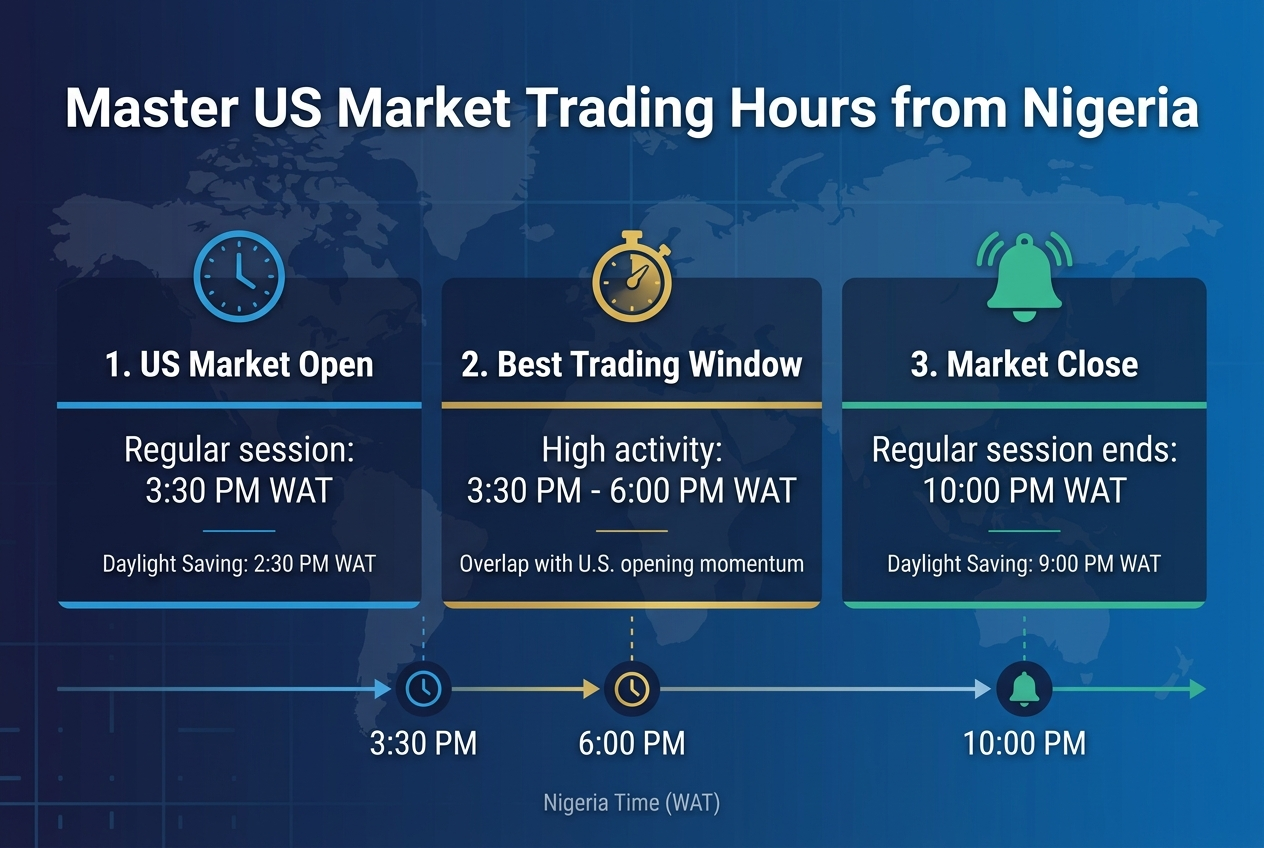
The US stock market operates on Eastern Time (ET), which puts Nigeria at a 5-hour advantage during standard time and 4 hours during daylight saving time. When it’s 9:30 AM in New York (market opening), it’s 2:30 PM in Lagos during standard time, or 1:30 PM during daylight saving periods.
Nigerian investors typically find themselves trading during afternoon and early evening hours. Market opening at 9:30 AM ET translates to 2:30 PM West Africa Time (WAT) during winter months, while market close at 4:00 PM ET means 9:00 PM WAT. This timing actually works well for many Nigerian professionals who can monitor their investments after regular work hours.
Pre-market trading sessions run from 4:00 AM to 9:30 AM ET, which means 9:00 AM to 2:30 PM WAT during standard time. After-hours trading extends until 8:00 PM ET, or 1:00 AM WAT, giving Nigerian investors extended opportunities to react to news and earnings announcements.
Smart Nigerian investors develop structured routines around US market hours. The afternoon market opening provides an excellent opportunity to review overnight news, company announcements, and global market movements that might affect SpaceX stock prices.
Create a pre-market checklist starting around 1:00 PM WAT. Review any SpaceX-related news, check futures markets for overall sentiment, and prepare your trading strategy. The 30-minute window before market open gives you time to adjust limit orders or prepare market orders based on pre-market activity.
Peak trading volume typically occurs during the first and last hours of the US trading session. For Nigerian investors, this means 2:30 PM to 3:30 PM WAT offers the highest liquidity and tightest spreads for SpaceX stock. The closing hour (8:00 PM to 9:00 PM WAT) also presents increased activity as institutional investors adjust positions.
Consider your local schedule when planning trades. Many Nigerian investors prefer placing orders during lunch breaks or immediately after work, which conveniently aligns with US market hours. Weekend preparation becomes crucial since you can research and plan trades when markets are closed.
Daylight saving time creates a shifting schedule that Nigerian investors must track carefully. The US switches to daylight saving time on the second Sunday in March and returns to standard time on the first Sunday in November. During these transitions, market hours shift by one hour relative to Nigerian time.
From March to November, when the US observes daylight saving time, Nigerian investors trade one hour earlier. Market opening moves from 2:30 PM to 1:30 PM WAT, and closing shifts from 9:00 PM to 8:00 PM WAT. This change affects not just regular trading hours but also pre-market and after-hours sessions.
Mark these transition dates on your calendar and set reminders on your phone. Many Nigerian investors miss trading opportunities or place orders at the wrong times during the first few days after time changes. Your brokerage platform should display market hours in local time, but double-check during transition periods.
The time shift also affects earnings announcements and company communications. SpaceX quarterly updates, investor calls, and major announcements typically follow US time zones, so adjust your expectations for when information becomes available. News that previously arrived at 6:00 PM WAT might now come at 5:00 PM WAT, potentially impacting your after-work trading routine.
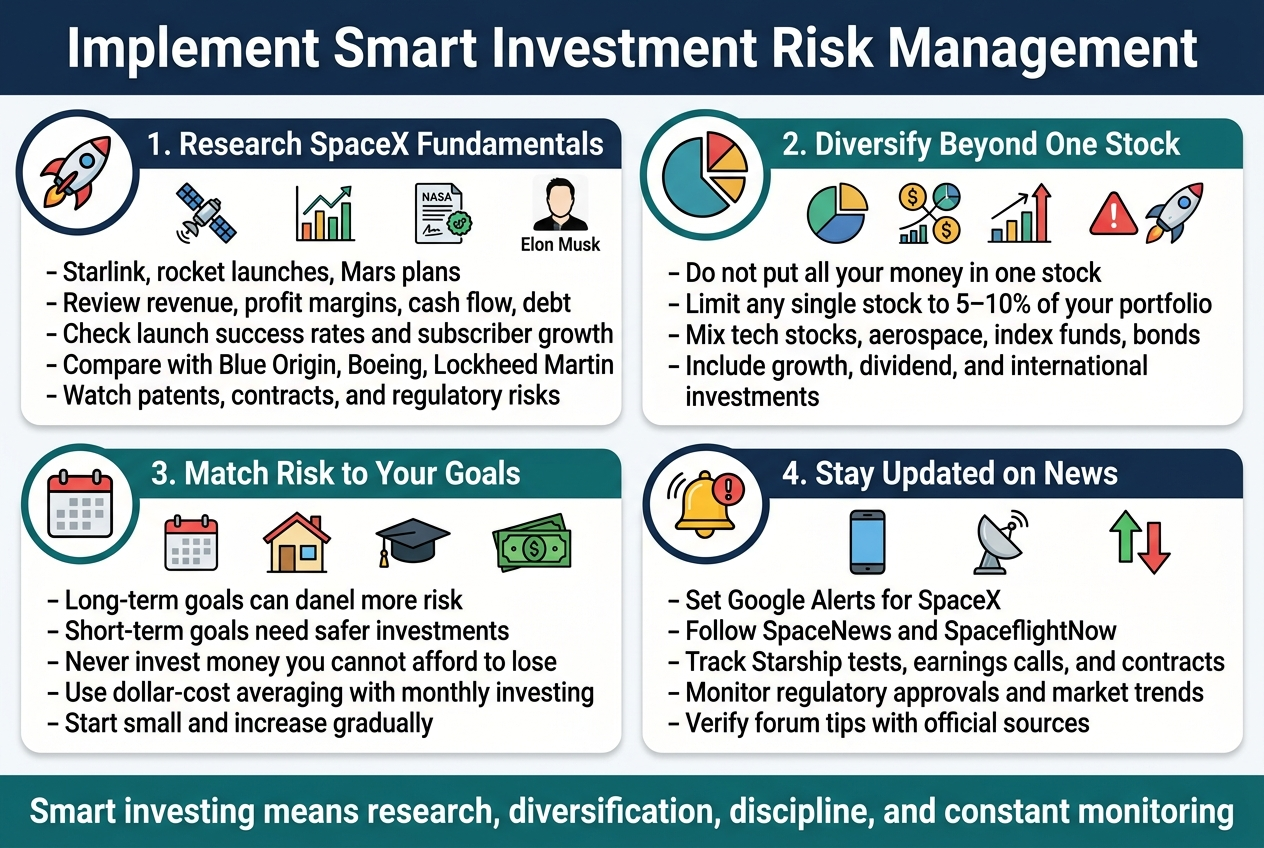
Before putting your hard-earned money into SpaceX stock, dig deep into what makes the company tick. Start by understanding their core business segments – satellite internet through Starlink, rocket launches for commercial and government clients, and their ambitious Mars colonization plans. Look at their revenue streams, profit margins, and how they stack up against competitors like Blue Origin and traditional aerospace companies.
Check out SpaceX’s financial performance by reviewing quarterly earnings reports, cash flow statements, and debt levels. Pay attention to their launch schedule success rates, Starlink subscriber growth, and any major contracts they’ve secured with NASA or commercial clients. The space industry moves fast, so understanding their technological advantages and patent portfolio can give you insight into their competitive moat.
Don’t forget to research Elon Musk’s leadership style and track record with other companies. His decisions significantly impact SpaceX’s direction and stock performance. Look at regulatory challenges the company faces, especially regarding satellite deployment and international space law compliance.
Putting all your investment money into SpaceX stock is like putting all your eggs in one rocket ship – exciting but risky. Spread your investments across different sectors, countries, and asset types to protect yourself from major losses if SpaceX hits turbulence.
Consider investing in other technology stocks, established aerospace companies like Boeing or Lockheed Martin, and even some conservative options like index funds or government bonds. The space industry is particularly volatile, with stock prices swinging dramatically based on launch successes, regulatory news, or Musk’s Twitter activity.
A good rule of thumb is to limit any single stock to no more than 5-10% of your total portfolio. This way, you can still benefit from SpaceX’s potential growth without risking your entire financial future on one company’s performance. Mix growth stocks with dividend-paying companies and international investments to create a balanced approach.
Your SpaceX investment should match your timeline and risk tolerance. If you’re saving for retirement in 20 years, you can afford to take more risks with growth stocks like SpaceX. But if you need the money in the next few years for a house down payment or your children’s education, stick to safer investments.
Never invest money you can’t afford to lose. The space industry is unpredictable – rocket explosions, regulatory setbacks, or market crashes can send stock prices plummeting overnight. Start with small amounts you’re comfortable losing, and gradually increase your position as you become more confident in your research and the company’s performance.
Consider using dollar-cost averaging by investing a fixed amount monthly rather than buying all at once. This strategy helps smooth out price volatility and reduces the risk of buying at a peak price.
Space industry news moves at light speed, and staying informed can make the difference between profit and loss. Set up Google Alerts for SpaceX, follow reliable space industry publications like SpaceNews and SpaceflightNow, and monitor Elon Musk’s social media accounts for company updates.
Watch for key events like Starship test flights, major contract announcements, regulatory approvals for satellite launches, and quarterly earnings calls. These events often trigger significant stock price movements, giving you opportunities to buy low or warning signs to reduce your position.
Pay attention to broader market trends affecting the aerospace sector, including government space budgets, competition from international space agencies, and technological breakthroughs that could disrupt SpaceX’s business model. Economic indicators like interest rates and inflation also impact growth stocks like SpaceX more than stable dividend companies.
Join investment communities and forums where Nigerian investors discuss U.S. stocks, but always verify information through official sources before making investment decisions.
SpaceX represents an exciting opportunity for Nigerian investors to participate in the space economy revolution. By following these straightforward steps – choosing a reliable platform, funding your account, finding SPCX, and placing your order – you can join the growing number of Nigerians investing in global markets. The key is starting with a reputable broker that offers US stock access and understanding the timing differences between Nigerian and American trading hours.
Remember that investing in any stock, especially in emerging sectors like space technology, comes with risks that match the potential rewards. Take time to research SpaceX’s business model, financial performance, and future prospects before committing your money. Start small if you’re new to international investing, and never invest more than you can afford to lose. The world of global investing is now at your fingertips – make sure you’re prepared to navigate it wisely.
Ifeyinwa C. Ofulue is a writer, web developer, UX designer, digital product creator, and researcher focused on AI tools, automation, UX design, and online business systems. He is the author of How to Use Claude Code to Create Anything and several other digital guides on online income, AI tools, and building profitable digital products. He helps beginners learn how to create digital products, build profitable websites, and use modern AI tools to generate income online. Find his work at digitalprofit101.com.
Through this website, I share practical tutorials, step-by-step guides, and proven strategies on topics such as AI productivity tools, website monetization, digital marketing, and automation.
My mission is simple: to make online business and digital skills accessible to anyone willing to learn.
When I’m not researching new web designs, AI tools, or writing tutorials, I focus on building scalable online systems and testing new ways to help creators earn online.
👉 Learn more about Ifeyinwa on the About page.